Climbing on Kalymnos
Seasons, areas and logistics for the island's climbing. Topos stay with the specialists.
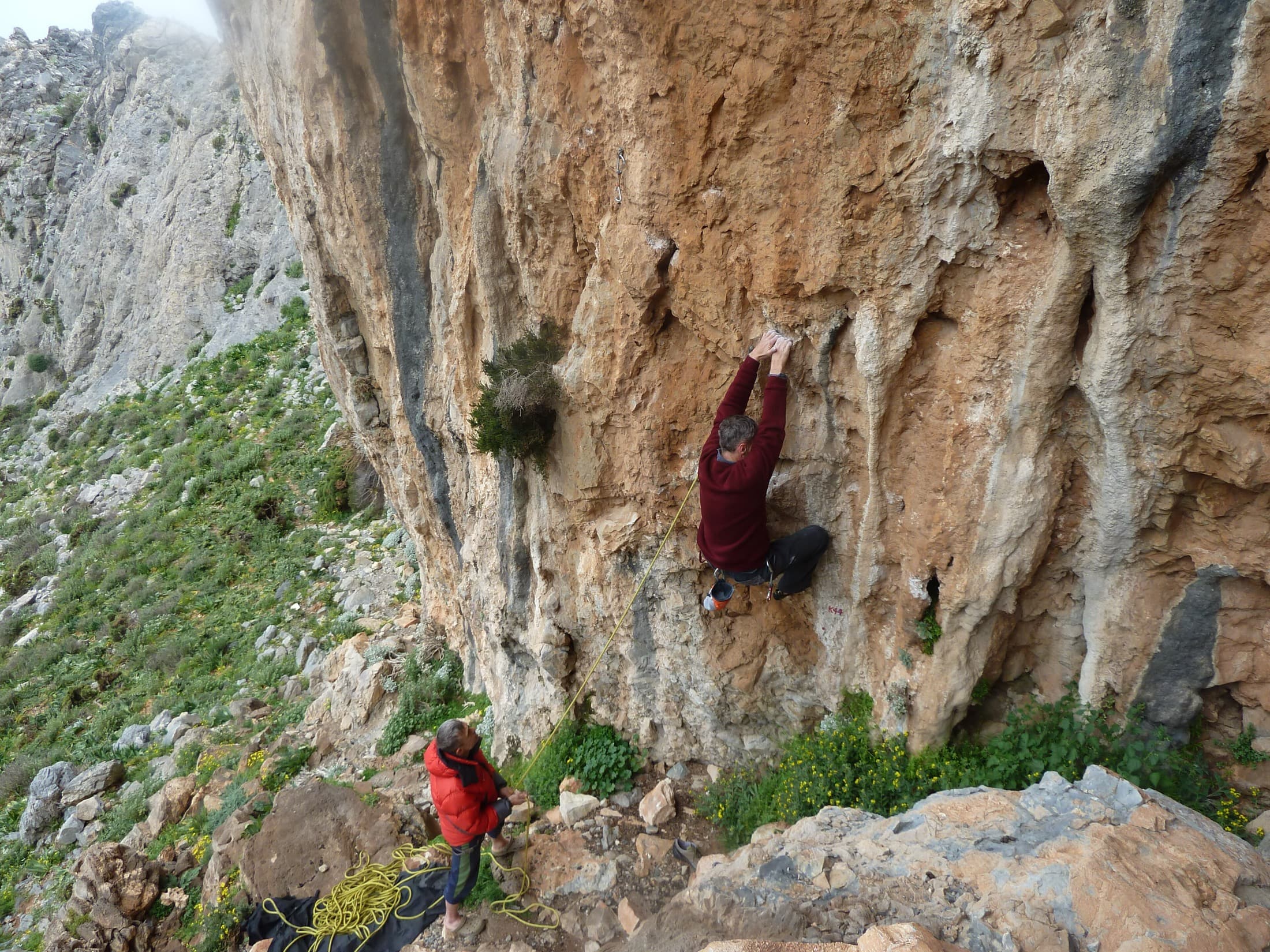
How the island is laid out
- The Masouri band: the biggest concentration of sectors rises directly above Masouri, Myrties and Armeos, including the famous cave sectors. Walk-ins of 20-35 minutes.
- The north: quieter sectors around Arginonta, Skalia and Emporios, with a swim below the crag.
- Telendos: ten minutes by taxi boat. East-facing walls with morning shade, useful in summer.
- Further out: sectors like the Olympic Wall trade a longer approach for empty belays.
Seasons and the festival
Spring and autumn are the climbing seasons. October brings the annual festival and the busiest weeks on the island: book accommodation months ahead. Summer climbing means dawn starts, shade tactics and Telendos.
Practical logistics
- Base: Masouri or Armeos for walking access. A scooter (±€10/day) opens the northern sectors: rental guide.
- Gear: the Masouri climbing shops rent and sell equipment and know the current conditions.
- Guides and courses: local schools run intro days through lead courses in season. See climbing for beginners.
- Rest days: boat trips, beaches and the sponge-diving history.
Route information
For topos, sectors and conditions use Climb Kalymnos and theCrag. Our pages cover everything around the climbing: getting here, staying, eating, rest days.
Frequently asked questions
Why is Kalymnos famous for climbing?
Thousands of routes on excellent limestone in one small area, short approaches, reliable weather and a village (Masouri) built around the scene. Few places combine sea and climbing this directly.
When is the climbing season on Kalymnos?
March to May and September to November. Summer works in the shade and on Telendos. October is festival month.
Where do climbers stay on Kalymnos?
Masouri and Armeos, directly below the main crag band. Many sectors are 20-35 minutes on foot.
Where do I find topos and route information?
The Climb Kalymnos guidebook and website, plus databases like theCrag. We cover the logistics around the climbing, not the topos.